KUALA LUMPUR, 13 January 2026 – Human Resource Development Corporation (HRD Corp) approved RM2.62 billion in financial assistance towards training and skills development activities in 2025, a growth of 32% against 2024. There were more than 2.8 million training places for HRD Corp-administered programmes and schemes that were recorded in 2025, also a positive growth of 3% against 2024. Beyond these statistics lie a more pertinent growth and development narrative.
The sector that recorded the biggest number of training places was the manufacturing sector with more than 795,000 training places in 2025. The manufacturing sector is the second largest sector in terms of contribution to GDP and typically contributes between 23-25% of Malaysia’s GDP. As of November 2025, a total of 2.4 million employees were recorded in this sector across the electrical and electronics products, food and beverages products, and petroleum and chemical products segments. The average salaries and wages paid in the manufacturing sector posted an expansion of 1.1% year-on-year as of November 2025.
The other significant economic sector to propel Malaysia’s digital economy is the information and communications technology (ICT) sector. In 2024, the digital economy contributed 23.4% to the GDP and is expected to contribute 25% in 2025. The total financial assistance approved by HRD Corp under the IR4.0 amounted to RM130 million. There were more than 103,000 training places that were recorded across all digital economy and ICT sectors.
This clearly implies that skills development is increasingly central to workforce resilience and business competitiveness. As industries adjusted to rapid technological shifts, tighter talent pipelines and evolving job requirements, HRD Corp focused on outcomes that were practical for employers, accessible to communities and aligned with the future direction of workforce development in Malaysia and the ASEAN region.
Alongside employer-led training priorities, HRD Corp sustained a strong focus on inclusive access to skills development through targeted initiatives. A total of 18,137 Malaysians were beneficiaries of skills development initiatives which used a mix of government grants and internal funds of HRD Corp.
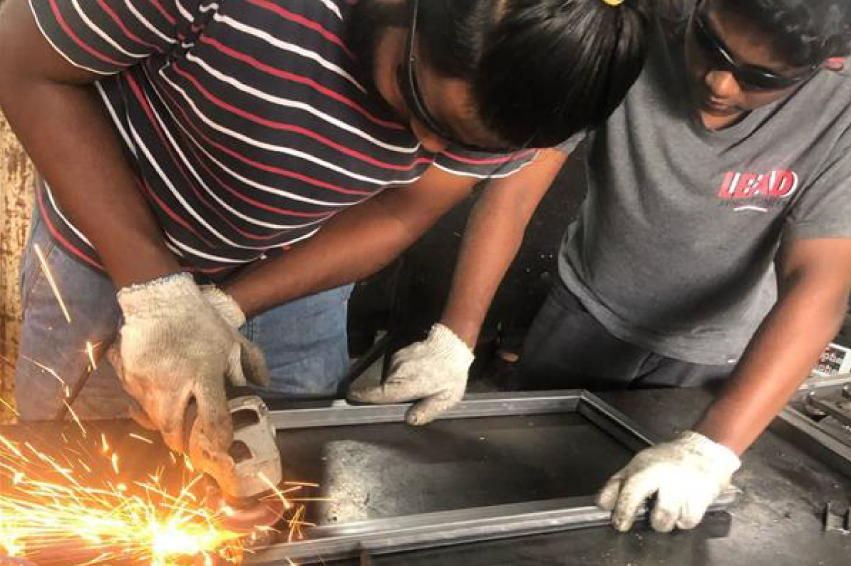
Among the initiatives include the Malaysia Indian Skills Initiative (MISI), where a total of 1,108 trainees were trained and enrolled, expanding employability pathways and skills opportunities for the Indian community. An additional 442 trainees are expected to be trained, reflecting HRD Corp’s sustained commitment to inclusive human capital development.
In addition to MISI, the Professional Advancement in Trucking & Haulage (PATH) is another collaborative initiative between HRD Corp, KESUMA and the Ministry of Transport (MoT), which targets 1,000 participants nationwide with the objective of strengthening the trucking and haulage workforce.
PATH focuses on training existing port workers and developing future commercial drivers by equipping them with Class E and GDL (E Kejur & E Bersendi) licences, as well as defensive driving competencies, to enhance employability and income opportunities in the transportation and logistics sector. In 2025, a total of 156 trainees in this sector were successfully trained under the PATH initiative.
Additionally, HRD Corp established a collaboration with the Centre for Technology Excellence Sarawak (CENTEXS) to focus on competency and certification-based training programmes aligned with current job market demands. In 2025, approximately 427 trainees were successfully trained under this programme, supported by employers who provided employment opportunities.
HRD Corp also continued to strengthen diversity and inclusion within Malaysia’s training ecosystem through the Training Market Transformation (TMT) Initiative, delivering eight (8) Train-the-Trainer sessions and benefiting 134 persons with disabilities (PWD), reinforcing the role of inclusive training approaches in building a more resilient workforce.
HRD Corp also continued to build skills, livelihoods and community outcomes through upskilling, entrepreneurship and TVET-based interventions. In 2025, HRD Corp trained 9,929 participants and reached 4,210 community beneficiaries through public-facing activities at its Pusat Latihan Pembangunan Kemahiran (PLPK). The centre also engaged 39 strategic partners, highlighting the value of community-based delivery models in extending the reach of skills development beyond major urban centres.
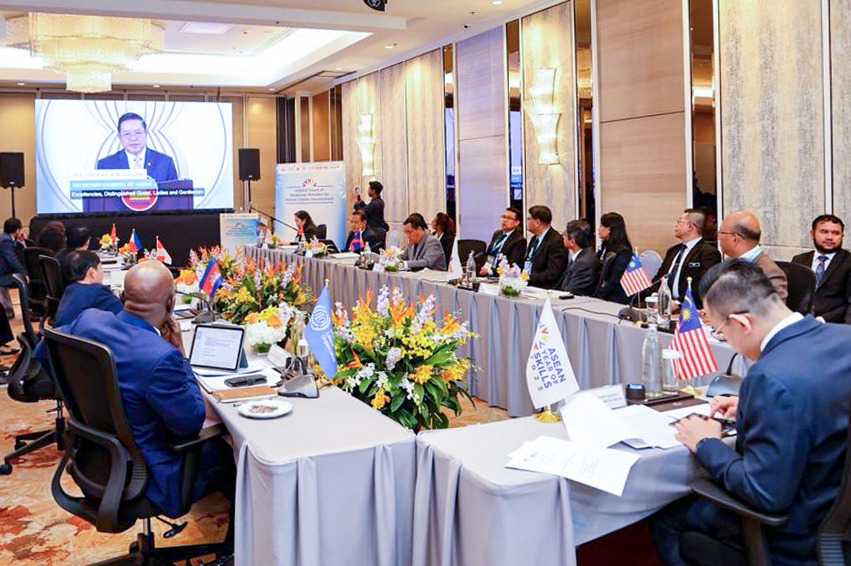
In conjunction with Malaysia’s chairmanship of ASEAN in 2025, HRD Corp in collaboration with the Ministry of Human Resources (KESUMA), carried the torch of Malaysia’s regional leadership in human capital development through the ASEAN Year of Skills (AYOS 2025). AYOS was a series of seven flagship platforms that was curated in close collaboration with the International Labour Organization (ILO). AYOS 2025 culminated at the Global Skills Forum 2025 (GSF 2025) and the ASEAN Forum of Manpower Ministers for Human Capital Development (AFMM-HCD), which was graced by the Deputy Prime Minister of Malaysia, YAB Dato’ Seri Dr. Ahmad Zahid bin Hamidi and the Director General of the ILO, His Excellency Mr. Gilbert F. Houngbo.
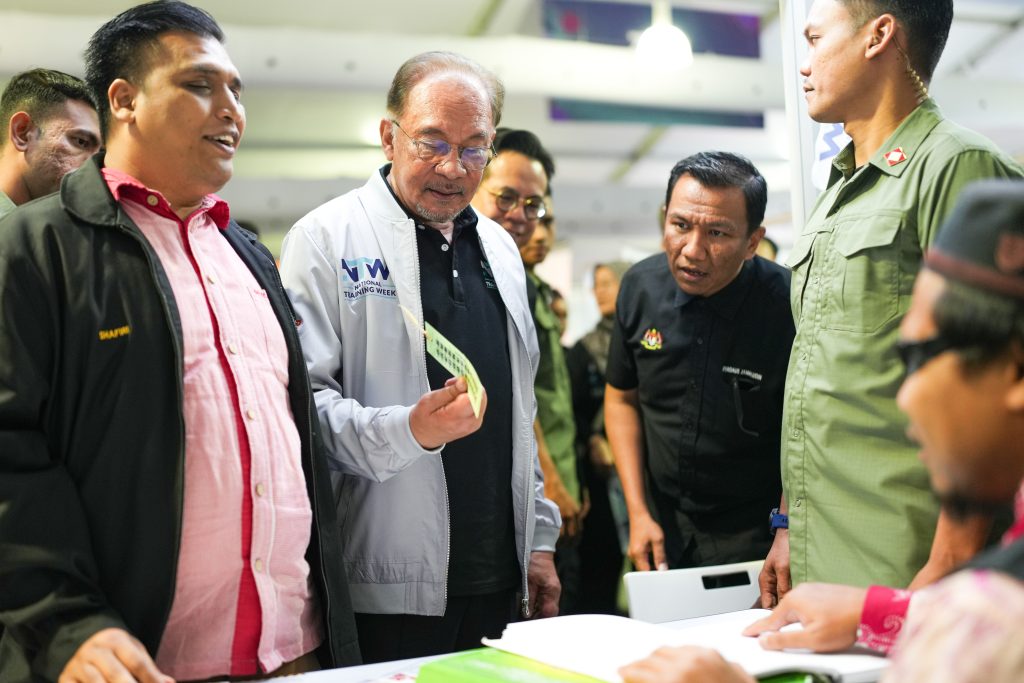
One of HRD Corp’s flagship events, the National Training Week (NTW), introduced in 2022, marked its third edition in 2025 with expanded reach and participation. Held in conjunction with AYOS, NTW 2025 opened participation beyond Malaysia’s borders for the first time, strengthening regional collaboration and widening access to learning opportunities. With 3,742,300 total enrolments, compared with 375,817 in 2024, NTW 2025 reflected a major acceleration in public and industry participation.
In 2025, HRD Corp adopted a disciplined, risk-based investment approach to safeguard levy contributors’ funds while optimising long-term returns. Guided by robust governance, prudent asset allocation and active risk management,
investments were calibrated to balance levy fund and capital preservation with sustainable growth amid a challenging market environment.
As a result, assets under management grew by 3% to RM4.16 billion, reflecting steady levy contribution and reserve expansion and resilience. The investment portfolio generated returns of RM215 million, translating into a healthy return on investment (ROI) of 5.35%. These outcomes underscore HRD Corp’s commitment to sound financial stewardship and risk-based portfolio management of funds.
As workforce challenges become increasingly complex, HRD Corp remains focused on scaling access, strengthening quality and delivering skills outcomes that support workforce readiness and inclusive growth, while contributing to Malaysia’s broader human capital priorities and ASEAN collaboration.
Despite the significant achievements recorded in 2025, HRD Corp recognises the need to sharpen and reposition its focus in 2026. Strengthening SME participation in training and talent development, alongside accelerating the growth of a highly skilled Malaysian workforce, will be among our key priorities for the year ahead.